
What is the golden rule for bespoke kitchen design?
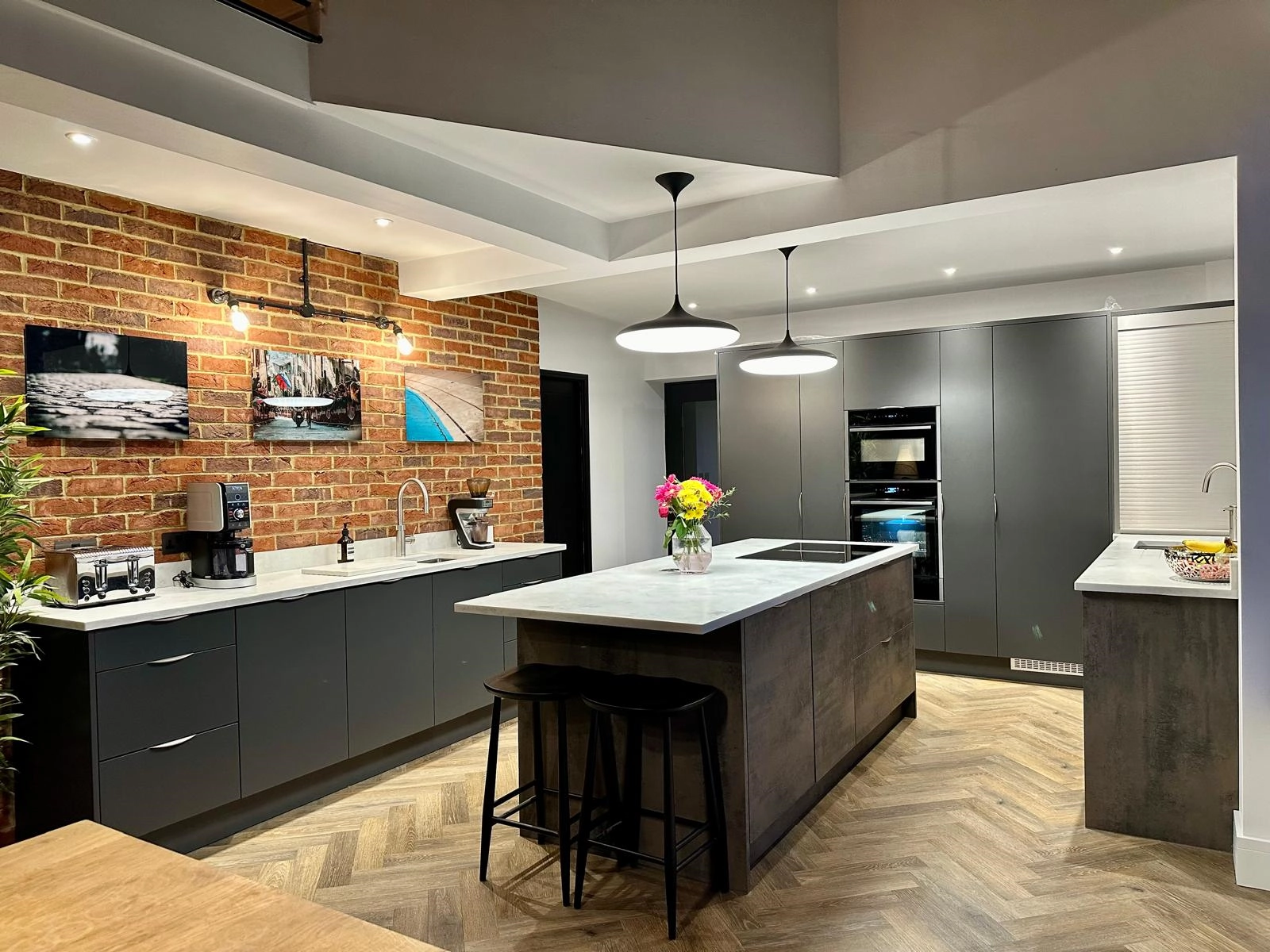
In bespoke kitchen design, there is one principle that continues to shape the most functional and elegant spaces. While materials, finishes and technologies evolve, this rule remains consistent. Often referred to as the kitchen golden rule or the kitchen work triangle, it is a rooted concept that has stood the test of time.
In this blog, we explore what the kitchen work triangle is, why it remains relevant in modern bespoke kitchens and how it is thoughtfully interpreted in luxury, design-led kitchen interiors.
Understanding the Kitchen Work Triangle
The kitchen work triangle is a classic design principle developed to improve efficiency and flow within the kitchen.
It focuses on the relationship between three primary working zones:
- The sink
- The refrigerator
- The oven
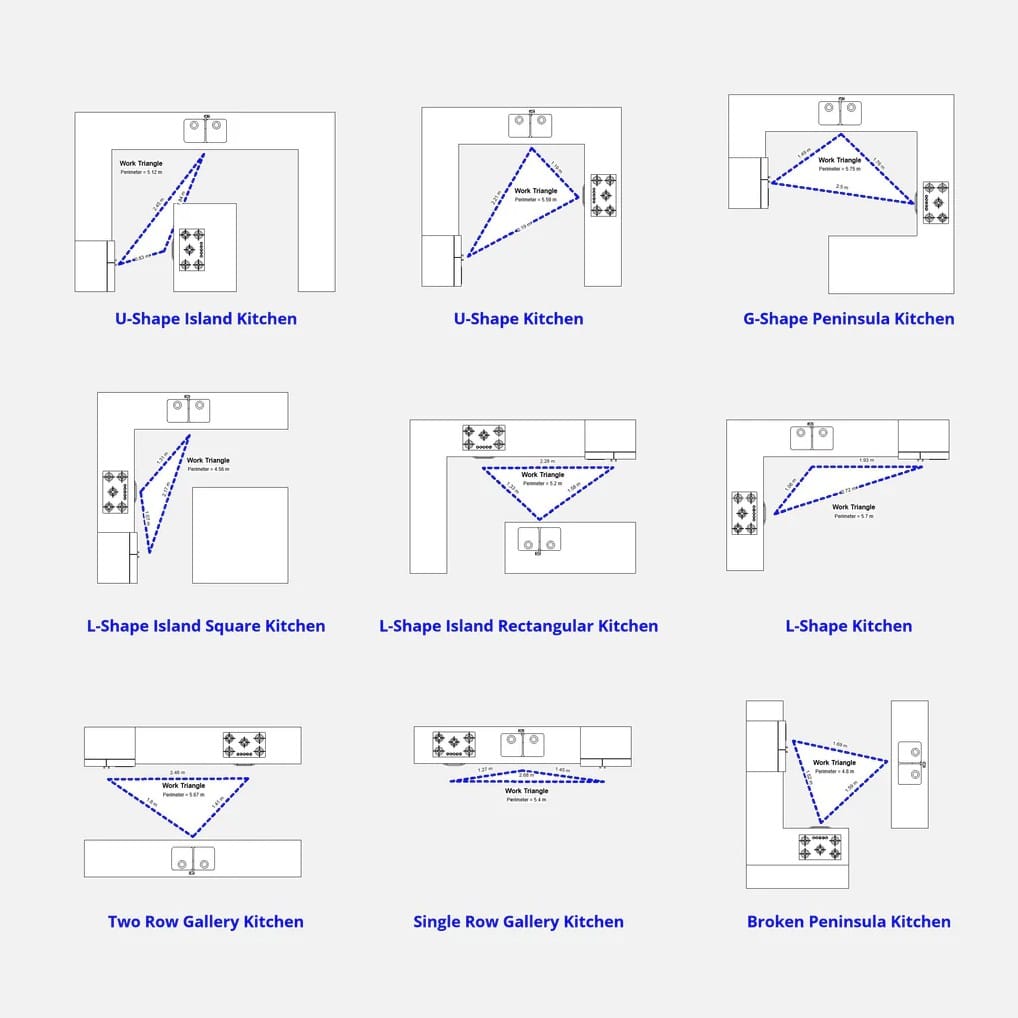
While adaptable, the classic principle suggests each leg of the triangle should be between 1.2m and 2.7m, with the total perimeter of the triangle being between 4m and 8m. This ensures key areas are close enough to be efficient but not so close that the space feels cramped, however this can change based on the size and layout of the kitchen of course.
When arranged in an efficient triangular layout, these three points minimise unnecessary movement, reduce steps and create a logical workflow. Rather than moving back and forth across the space, you are able to move fluidly between key tasks, making the kitchen feel intuitive and effortless to use.
The Work Triangle in Classic Kitchen Layouts
Before discussing modern kitchens, it’s helpful to see how the golden rule functions in traditional kitchen configurations. These classic kitchen layouts naturally lend themselves to an efficient triangle, providing a blueprint for fluid movement. In our bespoke designs, we use these proven forms as a starting point, refining them to perfection.
The Galley or Corridor Kitchen
This layout features two parallel runs of units, creating a central walkway. It often results in one of the most efficient and compact work triangles imaginable. Typically, the sink and hob are placed on one side, with the refrigerator and storage on the opposite side, forming a tight, zig-zag triangle that minimises steps. The key consideration in a bespoke galley design is ensuring the corridor is wide enough for appliances to open and for people to pass comfortably, without the kitchen becoming a traffic lane.
The L-Shaped Kitchen
Arranged along two adjacent walls, the L-shaped kitchen is a timeless and popular kitchen layout. It offers a flexible work triangle that can be adapted to suit various room sizes. The three points naturally distribute along the two legs of the ‘L’, often with the sink in the corner, the refrigerator on one leg, and the oven/hob on the other. This layout frees up the rest of the room for dining or living areas, making it ideal for open-plan concepts.
The U-Shaped Kitchen
With cabinetry and appliances on three walls, the U-shaped kitchen provides abundant storage and continuous countertop space. It creates a naturally contained and highly efficient work triangle within the ‘U’, with each point easily accessible from the central standing position. This layout is excellent for dedicated cooks who value having everything within reach. In a bespoke U-shaped kitchen, we pay particular attention to the corner solutions and ensure the space does not feel cramped or wasted, sometimes introducing elements like a peninsula or tailored storage to enhance the flow.
Each of these classic layouts demonstrates the enduring logic of the work triangle. In a bespoke kitchen by ICE Interior, we take this well established efficiency and enhance it further, ensuring the layout not only works perfectly but is also uniquely tailored to the architecture of your home and the rhythm of your daily life.
Why the Work Triangle Still Matters in Bespoke Kitchens
Some people assume the work triangle is outdated and not suited for larger, open-plan kitchens. In reality, the golden rule remains as relevant as ever and must be interpreted to suit the space.
In bespoke kitchen design, the work triangle is not about strict measurements or limiting creativity. Instead, it provides a framework for understanding how people move through the kitchen and how tasks naturally flow.
At ICE Interior, we use the work triangle as a starting point, adapting it to your lifestyle and needs. Contact our team today to start designing your dream kitchen.
When applied correctly, the golden rule delivers:
- Improved efficiency
- Reduced physical effort
- A calmer, more considered kitchen experience
Applying the Work Triangle in Modern Bespoke Kitchen Layouts
- Small Kitchens
In homes where the kitchen is small, the classic triangular layout remains incredibly effective. By positioning the sink, oven and refrigerator within easy reach and without obstruction, the kitchen feels efficient and comfortable regardless of its actual size. Precision in layout allows the design to feel generous, even when space is limited. - Open-Plan Kitchens
In larger, open-plan kitchens, the work triangle becomes more fluid. Rather than compressing all activity into one tight zone, bespoke kitchen design allows the triangle to be subtly expanded while maintaining logical relationships between key elements. The triangle still exists, it is simply interpreted in a larger space. - Kitchen Islands
Kitchen islands have transformed how we use kitchens, introducing additional layers of functionality. In many bespoke kitchens, the island becomes part of the triangle itself. Often housing the sink or hob, while also acting as a social hub, a preparation surface and an informal dining area. Careful planning is essential to ensure that circulation, seating and working zones do not conflict. A well-designed kitchen island enhances the work triangle rather than disrupting it.
Reducing Steps, Increasing Ease
The original purpose of the kitchen work triangle is to minimise steps and unnecessary movement. A kitchen that requires constant crossing, backtracking or navigating obstacles quickly becomes tiring to use, no matter how visually impressive it may be. In bespoke kitchen design, efficiency should feel invisible. When the layout is correct, the kitchen simply works.
Designing Storage into the Kitchen Triangle
In bespoke kitchens, the work triangle extends beyond appliances to include storage and preparation areas.
Considerations include:
- Locating waste and recycling near the sink.
- Storing cookware close to the oven and hob.
- Placing everyday items within easy reach.
- Designing drawers around specific tools and habits.
By aligning internal storage with the logic of the triangle, the kitchen becomes intuitive as every element is exactly where it should be.
Bespoke Design Means Interpreting the Golden Rule
While the kitchen work triangle is a powerful design principle, it is not a rigid formula. At ICE Interior, we interpret the golden rule to suit your needs.
Modern kitchens may include:
- Multiple ovens
- Separate refrigeration zones
- Secondary sinks
- Pantry rooms
In these cases, the traditional triangle may become a series of overlapping triangles. Resulting in a kitchen that feels effortless to use.
Secondary Spaces and the Expanded Triangle
Many homes now incorporate additional kitchen-adjacent spaces such as pantries and utility rooms. These spaces allow the main kitchen to remain visually calm and uncluttered while still functioning at a high level.
In these designs, the golden rule expands beyond the main room. Refrigeration may be split between the kitchen and utility room, or secondary sinks may be introduced for preparation or cleaning. This strengthens the triangle by increasing the ease of movement between the key areas.
Timeless Design Begins with Intelligent Layout
You can change colours and finishes to match kitchen trends, but the layout remains the same. A bespoke kitchen designed around principles, like the golden rule, will remain relevant long after trends.
By prioritising movement, flow and ease of use, the kitchen becomes adaptable to changing lifestyles without requiring fundamental redesign.
Choosing a bespoke kitchen ensures a timeless design with a layout that suits your needs and lifestyle.
Lighting and the Kitchen Triangle
Lighting plays a crucial role in reinforcing the functionality of the kitchen work triangle. Each point of the triangle requires its own considered lighting solution. Task lighting ensures safety and clarity, while ambient and accent lighting contribute to the overall atmosphere of the space.
In bespoke kitchens, lighting supports the flow of movement, guiding the user naturally through the space. When aligned with the logic of the triangle, lighting enhances both function and aesthetic.
Common Kitchen Work Triangle Mistakes to Avoid.
- Traffic Interference: The triangle cutting through a major walkway to a garden door or hallway.
- Island Obstruction: An island that is too large or poorly placed, creating a blockade within the triangle.
- Over-Stretching: Distances that are too far, making simple tasks a chore.
- Appliance Clustering: Placing all three points too close together creates congestion.
The ICE Interior Approach
At ICE Interior, every bespoke kitchen begins with understanding how the space will be used.
We consider:
- Who uses the kitchen and how often
- How the kitchen connects to the rest of the home
- How the space will evolve over time
The kitchen work triangle is the unseen logic behind a truly joyful kitchen, it’s the difference between a kitchen that simply looks stunning and one that feels effortlessly right for years to come, but it is always shaped in line with the individual client, tailored to your home and how you live.
Create Your Bespoke Kitchen With ICE Interior
At ICE Interior, we specialise in creating bespoke designer kitchens that prioritise your needs and lifestyle. Get in contact with us today, our experienced team will be happy to help.
Call us on 01590 675675 or complete the online contact form.